
Industrial Plastic Sheets, Rods & Tubes
Calsak Plastics supplies industrial plastic sheets, rods, tubes, and specialty materials for fabrication, manufacturing, construction, marine, and display applications. Our product range includes acrylic, polycarbonate, HDPE, PVC, PETG, ABS, engineering plastics, composite panels, and other performance materials — with technical support and custom-cut options for industrial buyers.
Compare plastic materials by application, performance need, and product type to find the right solution for your project.
Plastic Materials by Product Type
Calsak stocks plastic materials across all major product forms. Sheets are available in standard 48″ × 96″ sizes and oversized formats across acrylic, polycarbonate, HDPE, PVC, PETG, ABS, and engineering grade lines. Rods and tubes are stocked in multiple diameters and wall thicknesses for machining and fabrication work. Panels include aluminum composite and structural foam options for architectural and signage applications. All product types are available cut-to-size or as full-stock pieces, with most orders shipping within 1–3 business days from the branch nearest your facility.
Specialty substrates cover printable materials (LumaPrint®, Acryglas®), marine-grade materials (Trident®), and eco-conscious lines incorporating recycled acrylic content. If your application requires a form or grade not listed, contact your nearest branch — our technical team can source or recommend alternatives across the full spectrum of thermoplastic and composite materials.
Plastic Materials by Application
Match the right material family to your end-use application before specifying grade or thickness.
Machine Guards & Safety Glazing
Polycarbonate is the industry standard for machine guarding — virtually unbreakable, OSHA-compatible, and optically clear enough for operators to see moving parts. Acrycast® acrylic is an alternative where scratch resistance and optical finish matter more than peak impact load.
View polycarbonate for machine guardsSignage & Displays
Acrycast® cell-cast acrylic sets the standard for illuminated signage, architectural lettering, and retail displays. PolyGuard® polycarbonate handles outdoor sign applications where impact and weather resistance are equally important as appearance.
Explore Acrycast acrylic for signageMarine & Outdoor Use
Trident® E-ABS and expanded PVC are engineered specifically for boat building, dock equipment, and coastal cabinetry. HDPE and UV-stabilized polycarbonate round out the outdoor materials range for structural and glazing applications in exposed environments.
See Trident marine plastics for boat buildingFabrication & Machining
Engineering plastics — acetal (POM), nylon (PA), UHMW-PE, and PEEK — are the go-to for precision CNC machined components. Available in rod, tube, and sheet stock sized for common machining centers, with consistent tolerances across our branch inventory.
Browse rods and tubes for machining stockFood-Safe & Compliance-Driven
PETG is FDA-compliant, food-contact safe, and thermoforms easily for food service equipment, medical device housings, and pharmaceutical enclosures. HDPE also carries NSF and FDA compliance for direct-contact food processing applications.
View PETG for food-safe applicationsData Center Containment
Hot and cold aisle containment panels require fire-rated, dimensionally stable materials that hold structural form at sustained elevated temperatures. Calsak supplies and fabricates complete containment systems — panels, doors, and framing — to your spec.
View data center containment materialsPlastic Materials by Performance Need
Start with what the application demands, then select the material that meets those requirements most efficiently.
Impact Resistance
Polycarbonate leads the field — 250× the impact strength of standard glass, with no brittle fracture under sudden loading. For moderate impact where optical finish is also critical, Acrycast® cell-cast acrylic is a strong alternative. ABS offers good impact performance for opaque structural components.
View polycarbonate for impact resistanceOptical Clarity
Cell-cast acrylic transmits up to 92% of visible light — more than standard glass — making it the preferred choice for display, glazing, and lighting applications where clarity is non-negotiable. PETG and polycarbonate also offer good optical transmission where impact or food compliance is a co-requirement.
Explore acrylic for optical clarityChemical Resistance
HDPE and industrial PVC handle the widest range of acids, alkalis, salts, and solvents found in industrial process environments. PETG covers food-contact and pharmaceutical applications. For more aggressive chemical exposure — concentrated acids, organic solvents — engineering grades such as PVDF or PTFE apply.
Review HDPE for chemical resistanceUV & Weather Resistance
PolyGuard® UV-stabilized polycarbonate and Acrycast® acrylic are both engineered for outdoor performance — resisting UV degradation, color shift, and dimensional change across wide temperature ranges. HDPE handles structural outdoor applications where transparency is not required.
See PolyGuard polycarbonate for outdoor useHeat Resistance
Standard thermoplastics soften between 60–120°C. For elevated-temperature applications, engineering grades including PEEK, PPS, and polysulfone maintain mechanical properties well above standard service ranges. Always confirm HDT (heat deflection temperature) against your operating environment before specifying.
Browse engineering plastics for heat resistanceMachinability
Acetal (POM/Delrin), nylon, and UHMW-PE machine cleanly with tight tolerances and good surface finish at standard CNC speeds. These materials are preferred for bearings, bushings, gears, and precision structural components where dimensional stability over time is as important as the initial machine tolerance.
Browse engineering plastics for machiningComplete Plastic Materials Catalog
All major material lines stocked across our 7 U.S. branch locations. Click any material to explore grades, sizes, and application details.

Acrylic Sheets
Cell-cast (Acrycast®) and continuous-cast grades. Outstanding optical clarity, UV resistance, and ease of fabrication for signage, displays, and architectural glazing.
Compare acrylic sheet options
Polycarbonate
Virtually unbreakable thermoplastic. PolyGuard® UV-stabilized grade for outdoor signage; standard clear for machine guards, security panels, and safety shields.
Explore polycarbonate sheet uses
HDPE
Broad chemical resistance, moisture immunity, and excellent machinability at a competitive price. Widely used in marine fabrication, cutting surfaces, tanks, and outdoor structural components.
See HDPE applications and specs
Industrial PVC
Cost-effective, chemically resistant, and easy to fabricate. Standard specification for chemical processing equipment, ductwork, tanks, and any environment where metals corrode.
Review industrial PVC solutions
PETG
FDA-compliant, food-contact safe, and easy to thermoform. Combines optical clarity with chemical resistance and impact strength for food service, medical, and retail applications.
View PETG sheet specifications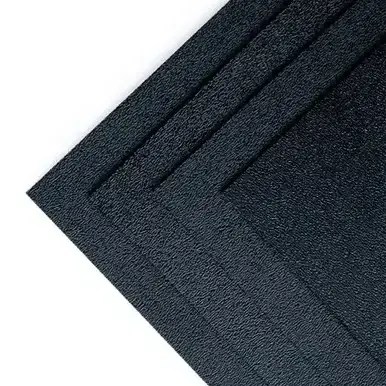
ABS
Rigid, impact-resistant, and easily machined or thermoformed. The workhorse material for structural enclosures, automotive interior components, and industrial prototyping.
View ABS material details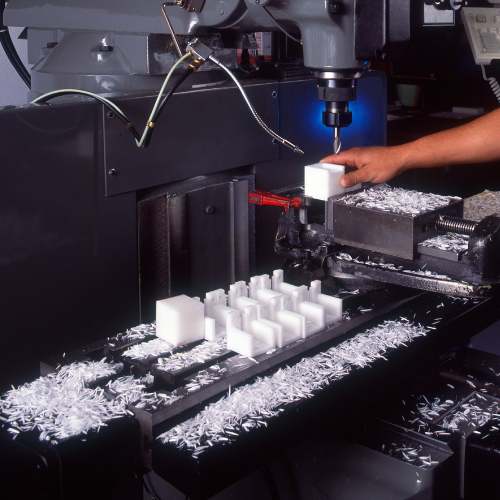
Engineering Plastics
Nylon, acetal (POM), UHMW-PE, and PEEK for precision machined components where commodity thermoplastics fall short. Rod, tube, and sheet stock for CNC machining operations.
See engineering plastics options
Marine Grade Plastics
Trident® E-ABS and expanded PVC engineered to resist saltwater, UV, humidity, and mechanical vibration. Used in hulls, marine cabinetry, dock equipment, and any coastal application where standard materials corrode.
Explore marine grade plasticsNeed Help Choosing the Right Plastic Material?
Start with the application and performance requirements. Buyers typically compare plastic materials based on impact strength, optical clarity, chemical resistance, temperature exposure, UV stability, machinability, compliance requirements, and budget. Calsak Plastics helps match the right sheet, rod, tube, or panel material to the job — contact your nearest branch or use the selection criteria below as a starting point.
Define Performance Requirements
Start with mechanical demands: impact resistance, tensile strength, operating temperature, and whether optical clarity or opacity is required. These factors eliminate most unsuitable materials before you get to grade or thickness decisions.
Assess Environmental Exposure
UV exposure, moisture, chemicals, and temperature extremes each narrow the field significantly. Outdoor applications need UV-stabilized grades. Chemical environments require verified resistance data. Marine applications need saltwater and humidity immunity.
Consider Fabrication Method
CNC machining, thermoforming, welding, and solvent bonding behave differently across material families. Engineering plastics machine cleanly at tight tolerances; acrylic thermoforms at lower temperatures; polycarbonate requires specific solvent cement systems for structural bonds.
Confirm Regulatory Compliance
Food contact requires FDA-compliant grades. Electrical enclosures may require UL 94 V-0 flame ratings. Fire-rated building materials follow ASTM E84. Identify all compliance requirements before specifying material and grade to avoid redesign costs.
Balance Budget and Lead Time
Commodity plastics — HDPE, PVC, standard acrylic — deliver the best value for high-volume, non-critical applications. Engineering plastics carry a cost premium justified by performance. Ask about branch stock availability to minimize lead time for your project timeline.
Talk to a Material Specialist
When requirements are complex or multiple materials could work, Calsak’s technical team evaluates your specs and recommends the optimal solution — including proprietary grades and specialty lines not available from general distributors.
Cut-to-Size & Custom Fabrication
Calsak Plastics goes beyond material supply. Our in-house fabrication team handles precision cutting, routing, forming, and finishing — components arrive ready for assembly, installation, or prototyping. Provide dimensions and material specifications; we handle the rest.
-
CNC Plastic Routing — High-precision routing for custom panels, components, and signage to exact specification
-
CNC Drilling — Accurate drilling from simple through-holes to complex multi-axis patterns across all material types
-
Thermoforming — Complex curved shapes formed from flat sheet stock with repeatable dimensional accuracy
-
Heat & Cold Bending — Custom curves and angles without compromising material structural integrity
-
Polished Edge Finishing — Display-quality, installation-ready edges on acrylic and other transparent materials
-
Assembly & Kitting — Streamlined kitting that reduces handling time at your facility
Nationwide Supply, Local Branch Support
Seven strategically positioned branches minimize shipping distance and support local buyers with same-day or next-day material availability. Each location is staffed with technical sales specialists who understand your regional market and applications. This is a national product hub — local branch pages have full contact, hours, and local inventory details.
Common Questions from Industrial Buyers
Quick answers for engineers, procurement managers, and fabricators evaluating plastic material suppliers.
What plastic materials does Calsak Plastics supply?
Calsak supplies acrylic (including exclusive Acrycast® cell-cast), polycarbonate (PolyGuard®), HDPE, industrial PVC, PETG, ABS, engineering plastics (nylon, acetal, UHMW, PEEK), marine-grade plastics (Trident®), aluminum composite panels (Aluplast®), and specialty substrates — stocked as sheets, rods, tubes, and cut-to-size pieces.
What plastic sheet materials do you stock?
Calsak stocks plastic sheets in acrylic (cell-cast Acrycast® and standard continuous-cast), polycarbonate (standard clear and PolyGuard® UV-stabilized), HDPE, industrial PVC (rigid and foam), PETG, ABS, aluminum composite panels (Aluplast®), and marine-grade expanded PVC and E-ABS (Trident®). Most sheet lines are available in standard 48″ × 96″ and oversized formats.
Do you offer rods, tubes, and cut-to-size plastic sheets?
Yes. Calsak stocks plastic rods and tubes in multiple diameters and wall thicknesses across engineering grade lines including acetal, nylon, UHMW-PE, and PEEK. Cut-to-size service is available on all major sheet lines — provide your dimensions and we cut, package, and ship from the branch nearest your facility. Standard tolerance is ±0.030″.
Which plastic material is best for impact resistance?
Polycarbonate is the top choice — virtually unbreakable under sudden impact loading and the industry standard for machine guards, security glazing, and protective barriers. For moderate impact requirements where optical clarity and scratch resistance are equally important, Acrycast® cell-cast acrylic is a strong alternative. ABS works well for opaque structural enclosures where impact resistance is needed without transparency.
Acrylic vs polycarbonate: which material should I choose?
Choose acrylic when optical clarity, scratch resistance, and long-term UV weatherability are the primary requirements — the preferred material for signage, displays, and architectural glazing. Choose polycarbonate when impact strength is the critical factor, such as machine guards, safety shields, and security panels. Polycarbonate is significantly stronger but more prone to surface scratching during fabrication and handling.
Which plastic materials are best for chemical resistance?
HDPE and industrial PVC offer the broadest chemical resistance for most industrial environments — including acids, alkalis, salts, and common solvents. PETG is preferred for food-contact and pharmaceutical applications. For highly aggressive exposure such as concentrated acids or organic solvents, engineering grades like PVDF or PTFE may be required. Contact a Calsak specialist to match the correct grade to your specific chemical environment.
What plastic materials are best for outdoor use?
PolyGuard® UV-stabilized polycarbonate and Acrycast® cell-cast acrylic are both engineered for outdoor performance — resisting UV degradation, color shift, and dimensional instability across wide temperature ranges. For structural outdoor applications where transparency is not required, HDPE offers excellent weather resistance and moisture immunity without the cost of optical-grade materials.
Can Calsak Plastics help with material selection for industrial applications?
Yes. Calsak’s technical sales team supports material selection across all product lines — evaluating your application requirements, performance needs, compliance requirements, and budget to recommend the right material and grade. Contact your nearest branch directly or request a quote online to start a conversation with a specialist.
Does Calsak Plastics offer custom fabrication services?
Yes. Calsak provides in-house fabrication including CNC routing, CNC drilling, thermoforming, heat and cold bending, polished edge finishing, assembly, kitting, and packaged delivery. Fabricated components ship ready to install or assemble — reducing handling time and back-and-forth at your facility.
How do I select the right plastic material for my application?
Start with the performance requirements: impact resistance, clarity, chemical resistance, temperature range, UV stability, machinability, and compliance needs. Then consider the fabrication method and production volume. Calsak’s technical team can walk through your application requirements and recommend the right material, grade, and form — contact your nearest branch to get started.
Need Help?
Ready to find the right plastic material for your project? Contact Calsak Plastics today or request a quote online. With decades of experience, we are committed to providing top-quality products and exceptional customer service.